Choosing the right exhaust pipe size is an important part of building a performance exhaust system.
Two of the most common sizes in aftermarket exhaust applications are 2.5-inch and 3-inch exhaust pipes. Many enthusiasts assume that a larger pipe automatically means better performance, but that is not always the case.
The correct exhaust diameter depends on engine size, power level, turbocharging, exhaust configuration, and how the vehicle is used.
So, 2.5-inch vs. 3-inch exhaust — which one should you choose?
Why Does Exhaust Pipe Size Matter?
Exhaust tubing carries gases away from the engine. The diameter of that tubing affects how much exhaust gas the system can handle.
If the pipe is too small for the engine’s airflow requirements, it may create unnecessary restriction.
But installing an oversized exhaust pipe does not automatically improve performance.
A properly designed performance exhaust system should balance:
- Exhaust flow
- Pipe diameter
- Engine displacement
- Power level
- Turbo or naturally aspirated setup
- Muffler and resonator design
- Sound characteristics
The goal is not simply to use the largest pipe possible. It is to choose a diameter appropriate for the vehicle.
What Is a 2.5-Inch Exhaust Best For?
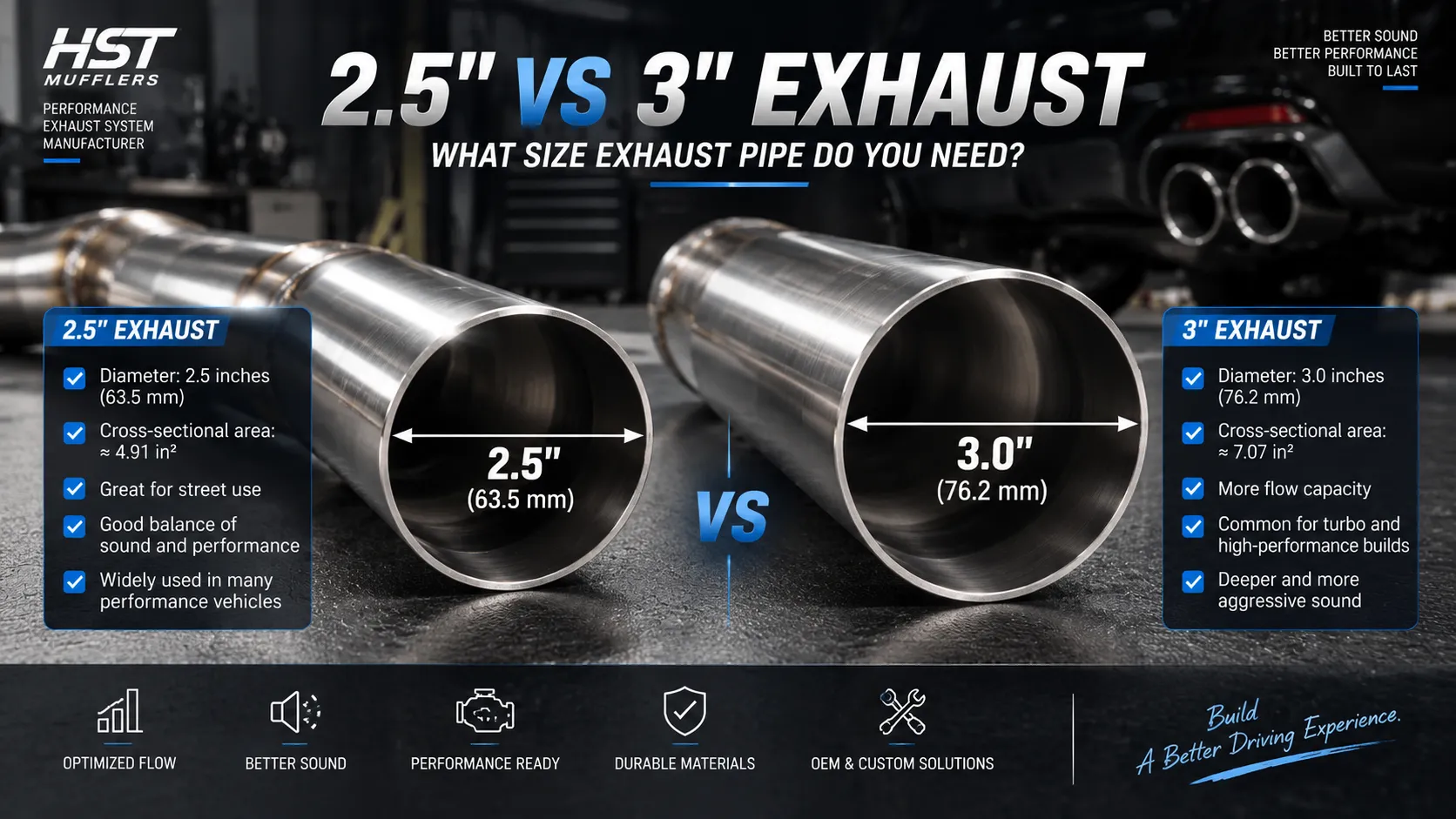
A 2.5-inch exhaust is commonly used on many street cars, sports cars, muscle cars, and light performance applications.
It can be a good choice when the vehicle has moderate exhaust-flow requirements and does not require extremely large tubing.
Potential advantages include:
- Good balance between flow and packaging
- Easier fitment in limited underbody space
- Suitable for many street performance builds
- Often lighter than larger tubing
- More installation flexibility
A 2.5-inch system can also work well in dual exhaust configurations, where exhaust gases are divided between two pipes.
However, engine specifications and power goals should always be considered before selecting a diameter.
What Is a 3-Inch Exhaust Best For?
A 3-inch exhaust pipe provides more cross-sectional area than a 2.5-inch pipe, allowing it to support greater exhaust volume.
For this reason, 3-inch tubing is commonly found in:
- Turbocharged performance cars
- Higher-output engines
- Modified vehicles
- Performance trucks
- Single-exhaust configurations
- High-flow cat-back systems
Many modern turbocharged performance vehicles use larger aftermarket exhaust tubing because increased engine airflow can create greater exhaust-flow requirements.
However, a 3-inch system is not automatically better for every vehicle.
Larger tubing also requires more space and may change the sound characteristics of the exhaust.
2.5-Inch vs. 3-Inch Exhaust: Key Differences
| Feature | 2.5-Inch Exhaust | 3-Inch Exhaust |
|---|---|---|
| Flow capacity | Moderate | Higher |
| Common use | Street performance | Higher-performance applications |
| Packaging | More compact | Requires more space |
| Weight | Generally lower | Generally higher |
| Sound | Can be more controlled | Often deeper/aggressive |
| Turbo applications | Application dependent | Common |
| Dual exhaust | Very common | Common on high-output builds |
These are general differences rather than universal rules.
The complete exhaust system matters more than pipe diameter alone.
Is a 3-Inch Exhaust Louder Than a 2.5-Inch Exhaust?
Not necessarily.
Pipe diameter influences exhaust sound, but the muffler, resonator, catalytic converter, engine, exhaust valve, and overall system design can have an even greater effect.
A 3-inch exhaust may produce a deeper or more aggressive tone in some applications, but a 2.5-inch system with an aggressive muffler can still be louder.
If sound is your main priority, consider the complete system rather than choosing pipe size based only on volume.
Is a 3-Inch Exhaust Better for Turbo Cars?
Larger exhaust tubing is commonly used on turbocharged vehicles because reducing restriction downstream of the turbo can be beneficial in higher-flow applications.
That is why 3-inch exhaust systems are popular on many modified turbo cars.
However, the ideal size still depends on:
- Engine displacement
- Turbo size
- Boost level
- Power target
- Single or dual exhaust
- Downpipe diameter
- Other modifications
A mildly modified turbocharged street car and a high-horsepower build do not necessarily need the same exhaust system.
Single vs. Dual Exhaust Pipe Size
When choosing exhaust diameter, it is also important to know whether the vehicle uses a single or dual exhaust system.
A single 3-inch pipe and two 3-inch pipes provide very different total flow areas.
For example:
Single Exhaust:
One primary pipe carries most or all exhaust gases.
Dual Exhaust:
The exhaust flow is divided between two pipes.
This is why pipe diameter should never be considered without looking at the complete exhaust configuration.
The number of exhaust tips does not determine whether a system is truly single or dual.
What About Muffler Inlet and Outlet Size?
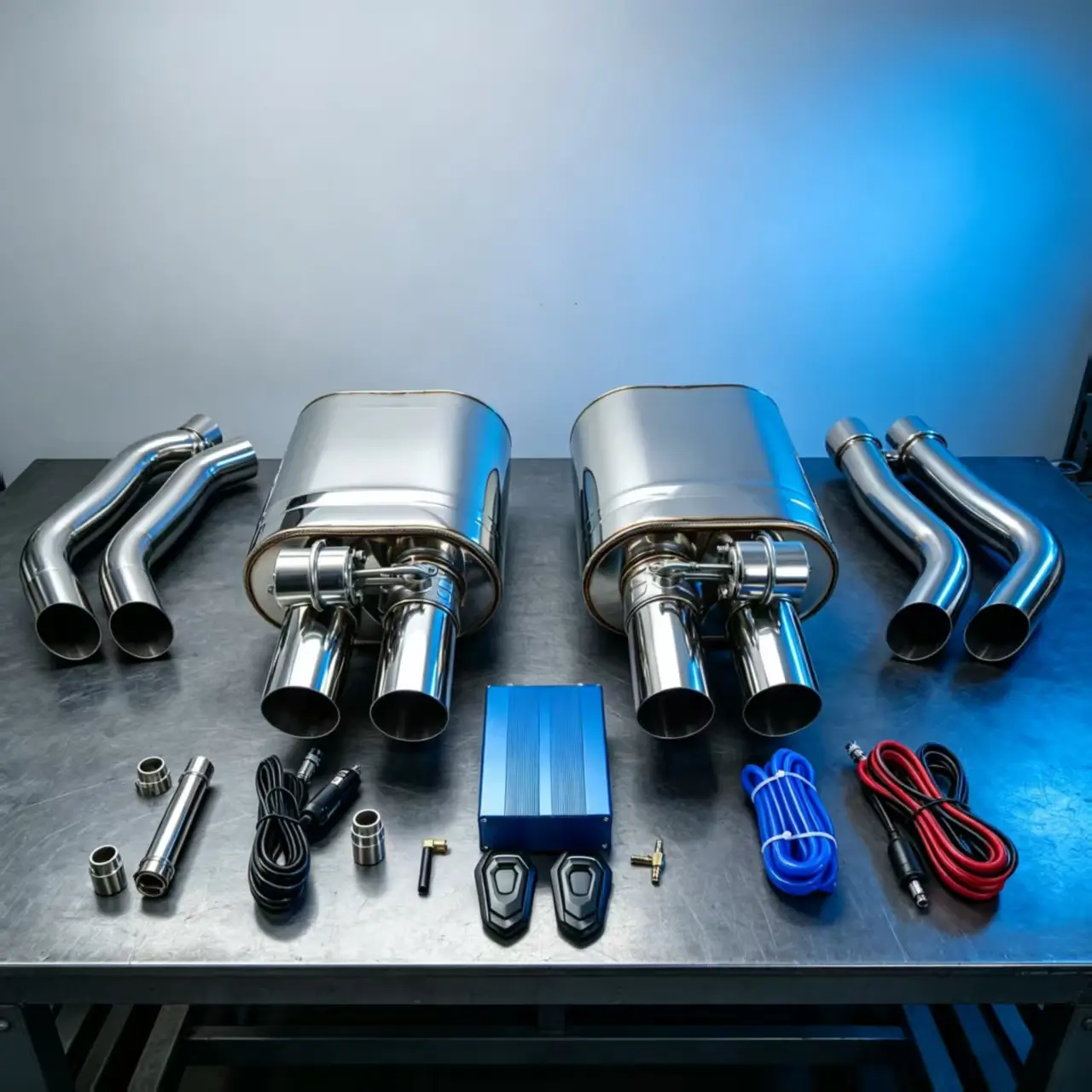
Your performance muffler should match the exhaust tubing whenever possible.
If your exhaust uses 3-inch tubing, a muffler with a 3-inch inlet and outlet can help maintain a consistent exhaust path.
For universal mufflers, always check:
- Inlet diameter
- Outlet diameter
- Muffler body size
- Inlet/outlet position
- Overall length
- Available installation space
Correct sizing makes installation easier and helps avoid unnecessary transitions in the exhaust system.
2.5-Inch or 3-Inch Exhaust: Which Should You Choose?
Choose based on the vehicle rather than following a simple “bigger is better” rule.
A 2.5-inch exhaust may be appropriate when you want a balanced street-performance setup with moderate airflow requirements.
A 3-inch exhaust may be more suitable when the engine produces greater exhaust volume, particularly in turbocharged or higher-output applications.
Before choosing, consider:
Engine + Power Level + Turbo + Single/Dual Configuration + Muffler + Fitment + Intended Use
For heavily modified vehicles, professional exhaust sizing based on the actual engine setup is preferable to relying on a universal recommendation.
Frequently Asked Questions
Is a 3-inch exhaust better than a 2.5-inch exhaust?
Not automatically. A 3-inch pipe provides greater flow capacity, but the correct size depends on the engine and complete exhaust setup.
Does a bigger exhaust pipe increase horsepower?
Larger tubing can reduce restriction when an engine requires greater exhaust flow, but oversized tubing alone does not guarantee additional horsepower.
Is 2.5-inch exhaust good for performance?
Yes. A 2.5-inch system can be suitable for many street-performance vehicles, especially when correctly matched to engine output and exhaust configuration.
What exhaust size is best for a turbo car?
There is no universal size. Engine displacement, turbo size, power level, downpipe diameter, and exhaust configuration should all be considered.
Can I use a 3-inch performance muffler?
Yes. If your exhaust system uses 3-inch tubing, a properly designed 3-inch performance muffler can help maintain a consistent exhaust path.
Final Thoughts
The 2.5-inch vs. 3-inch exhaust decision should be based on airflow requirements—not simply on which pipe is larger.
For many street vehicles, 2.5-inch tubing provides a practical balance of performance, sound, and fitment. For higher-output and turbocharged applications, 3-inch tubing may provide the additional flow capacity required.
Most importantly, consider the complete system.
Pipe Size + Muffler + Resonator + Engine + Fitment = A Better Exhaust Setup
If you’re still deciding between mufflers, cat-back systems, materials, and exhaust configurations, read our Performance Exhaust System Guide for a complete overview.