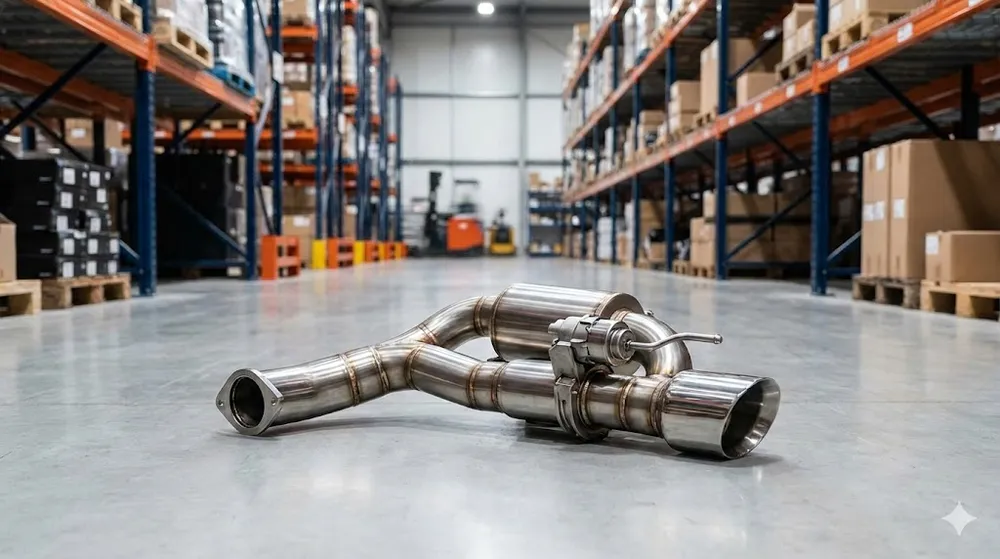
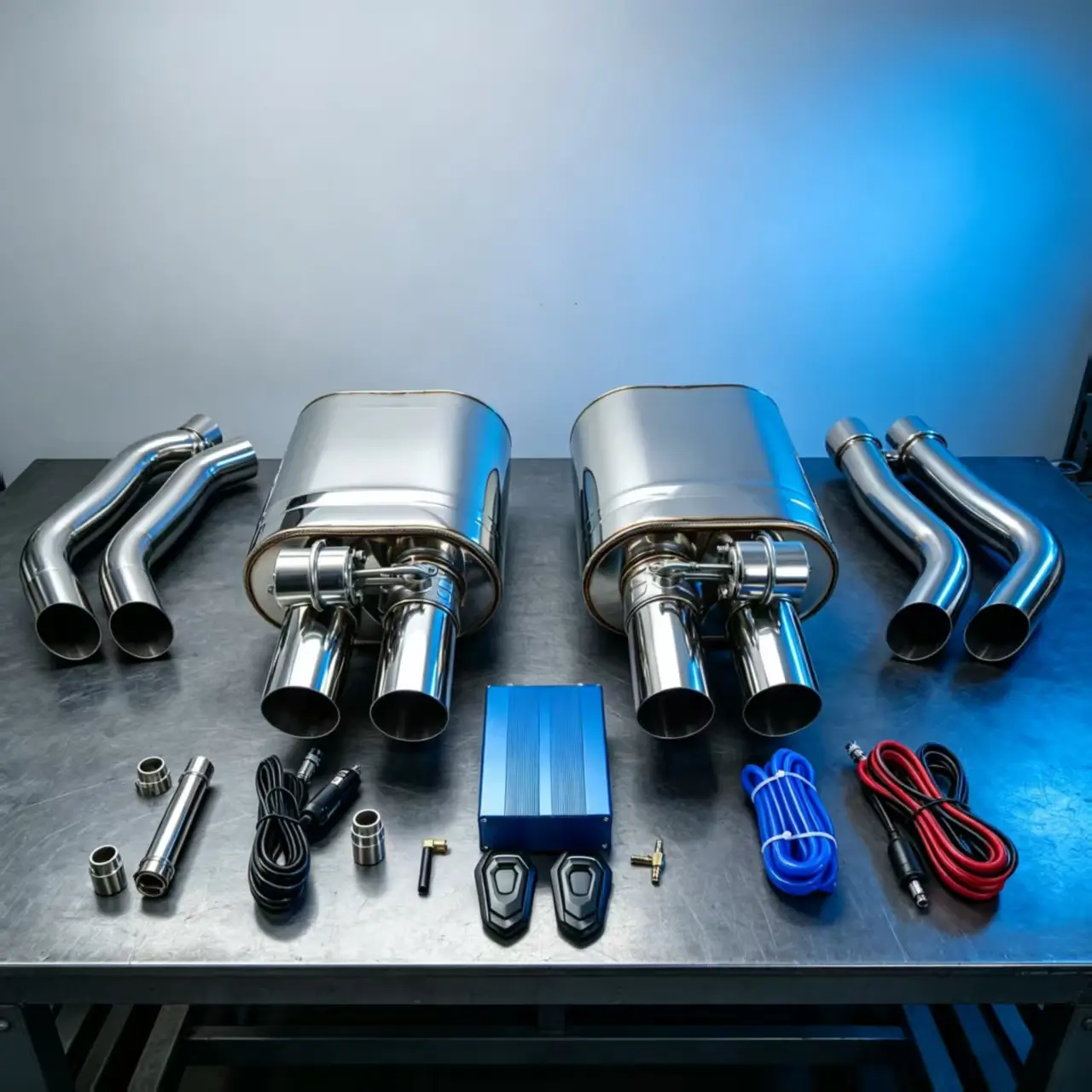
Upgrading a vehicle’s performance exhaust system is one of the most popular ways to change how a car or truck sounds, responds, and looks. But choosing the right exhaust setup involves more than simply finding the loudest muffler or the largest exhaust pipe.
A well-designed aftermarket exhaust system should balance exhaust flow, sound, durability, fitment, engine characteristics, and everyday drivability. Depending on the vehicle and the driver’s goals, the ideal setup might be a performance muffler, an axle-back system, a complete cat-back exhaust, or a custom exhaust configuration.
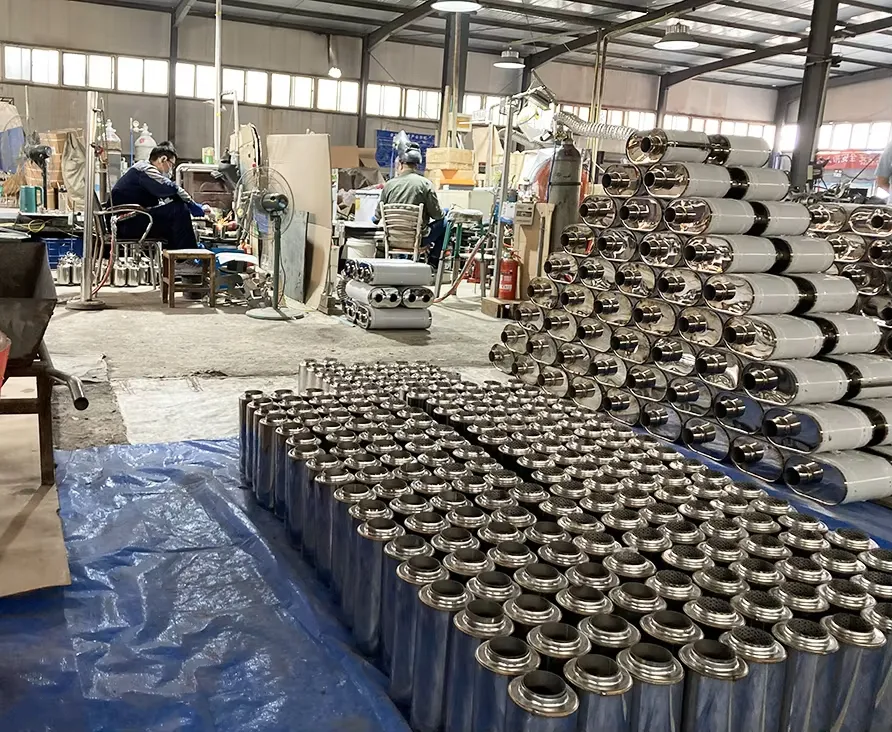
Materials matter as well. Stainless steel construction, properly sized tubing, quality welds, mandrel-bent pipes, and the right muffler design can all affect the long-term performance of an exhaust system.
So how do you choose the right setup?
This guide explains the major types of performance exhaust systems, the difference between cat-back and axle-back exhausts, how mufflers affect sound and flow, how to choose exhaust pipe size, and what to consider before upgrading your vehicle.
What Is a Performance Exhaust System?
A performance exhaust system is designed to improve or modify the way exhaust gases travel from the engine toward the rear of the vehicle while also changing the vehicle’s exhaust note.
Factory exhaust systems must satisfy many requirements at once, including manufacturing cost, packaging, noise limits, emissions-related design requirements, comfort, and broad consumer preferences.
An aftermarket performance exhaust gives enthusiasts more flexibility to prioritize characteristics such as:
- Improved exhaust flow
- A deeper or more aggressive exhaust sound
- Reduced restriction
- Improved appearance
- Corrosion resistance
- Potential performance improvements
- Weight reduction in certain applications
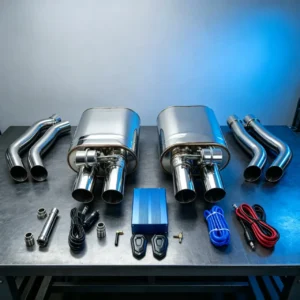
A complete exhaust system can include headers or manifolds, catalytic converters, mid-pipes, resonators, mufflers, exhaust tubing, hangers, clamps, and exhaust tips.
However, most street-oriented aftermarket upgrades do not replace every component.
Instead, buyers commonly choose between a performance muffler, axle-back exhaust, or cat-back exhaust system.
Understanding these differences is the first step toward choosing the correct setup.
How Can a Performance Exhaust Affect Vehicle Performance?
One of the biggest reasons enthusiasts install a performance exhaust is improved exhaust flow.
Every time an engine completes a combustion cycle, exhaust gases need to leave the cylinders efficiently. The exhaust system provides the pathway for those gases to move away from the engine.
Restrictions in that pathway can influence flow.
A performance-oriented system may use features such as:
- Larger or optimized tubing
- Mandrel-bent exhaust pipes
- High-flow muffler designs
- Smoother transitions
- More efficient internal muffler construction
The objective is not simply to install the largest possible exhaust pipe.
The goal is to create an exhaust system appropriate for the engine’s displacement, airflow requirements, RPM range, and intended use.
Does a Performance Exhaust Increase Horsepower?
It can, but there is no universal horsepower number that applies to every vehicle.
Actual gains depend on factors including the engine, factory exhaust restriction, turbocharging or natural aspiration, pipe diameter, muffler design, other modifications, and ECU calibration.
Replacing a highly restrictive factory system can potentially improve exhaust flow and help an engine operate more efficiently.
On the other hand, changing an already efficient factory exhaust may produce a smaller difference.
This is why claims such as “every performance exhaust adds X horsepower” should be treated carefully.
A properly designed system should be selected for the specific application rather than based on an exaggerated universal horsepower claim.
Performance Exhaust Sound: Why Muffler Design Matters
For many enthusiasts, sound is just as important as horsepower.
The muffler plays a major role in determining the character of the exhaust note.
Different internal designs can produce dramatically different results. One performance muffler might create a deep, smooth tone, while another can create a sharper and more aggressive exhaust note.
When choosing a muffler, consider four characteristics:
Volume – How loud should the vehicle be?
Tone – Do you prefer deep, aggressive, refined, or relatively quiet sound?
Interior noise – A system that sounds great outside the vehicle may create unwanted resonance or drone inside the cabin.
Engine characteristics – The same muffler can sound very different when installed on different engines.
This is why selecting the best performance muffler is not simply a matter of choosing the loudest option.
For a daily-driven vehicle, a balanced exhaust note with manageable cabin noise may be more desirable than maximum volume.
For a dedicated performance vehicle, a more aggressive system may be appropriate.
Cat-Back Exhaust vs. Axle-Back Exhaust: What’s the Difference?
Two of the most common terms buyers encounter are cat-back exhaust and axle-back exhaust.
Although they are sometimes confused, they describe different portions of the exhaust system.
What Is a Cat-Back Exhaust System?
A cat-back exhaust generally replaces the exhaust components downstream of the catalytic converter.
Depending on the vehicle, a cat-back exhaust system may include:
- Mid-pipe
- Resonator or crossover section
- Muffler
- Exhaust tubing
- Exhaust tips
- Clamps and installation hardware
Because a cat-back replaces a larger portion of the factory exhaust path, it provides manufacturers with more opportunities to modify flow and sound characteristics.
A properly designed cat-back can be a strong choice for enthusiasts looking for a more comprehensive exhaust upgrade without replacing emissions-related components upstream of the system.
What Is an Axle-Back Exhaust?
An axle-back exhaust replaces components closer to the rear of the vehicle, typically from around the rear axle to the exhaust tips.
It often includes the rear muffler or mufflers, tailpipes, and tips.
Because less of the original exhaust is replaced, an axle-back system can often be a simpler and more affordable way to change exhaust sound and appearance.
Cat-Back vs. Axle-Back: Which Is Better?
Neither option is automatically better.
Choose a cat-back exhaust when your priorities include a more comprehensive change to exhaust flow and sound.
Consider an axle-back exhaust when your main goals are changing the exhaust note and rear appearance while replacing fewer factory components.
The best choice depends on the vehicle, budget, desired sound, and performance goals.
How to Choose the Right Performance Muffler
A performance muffler is one of the most important components in an aftermarket exhaust setup.
Before choosing one, consider the following factors.
-
Inlet and Outlet Diameter
The muffler must match the exhaust tubing or be adapted correctly.
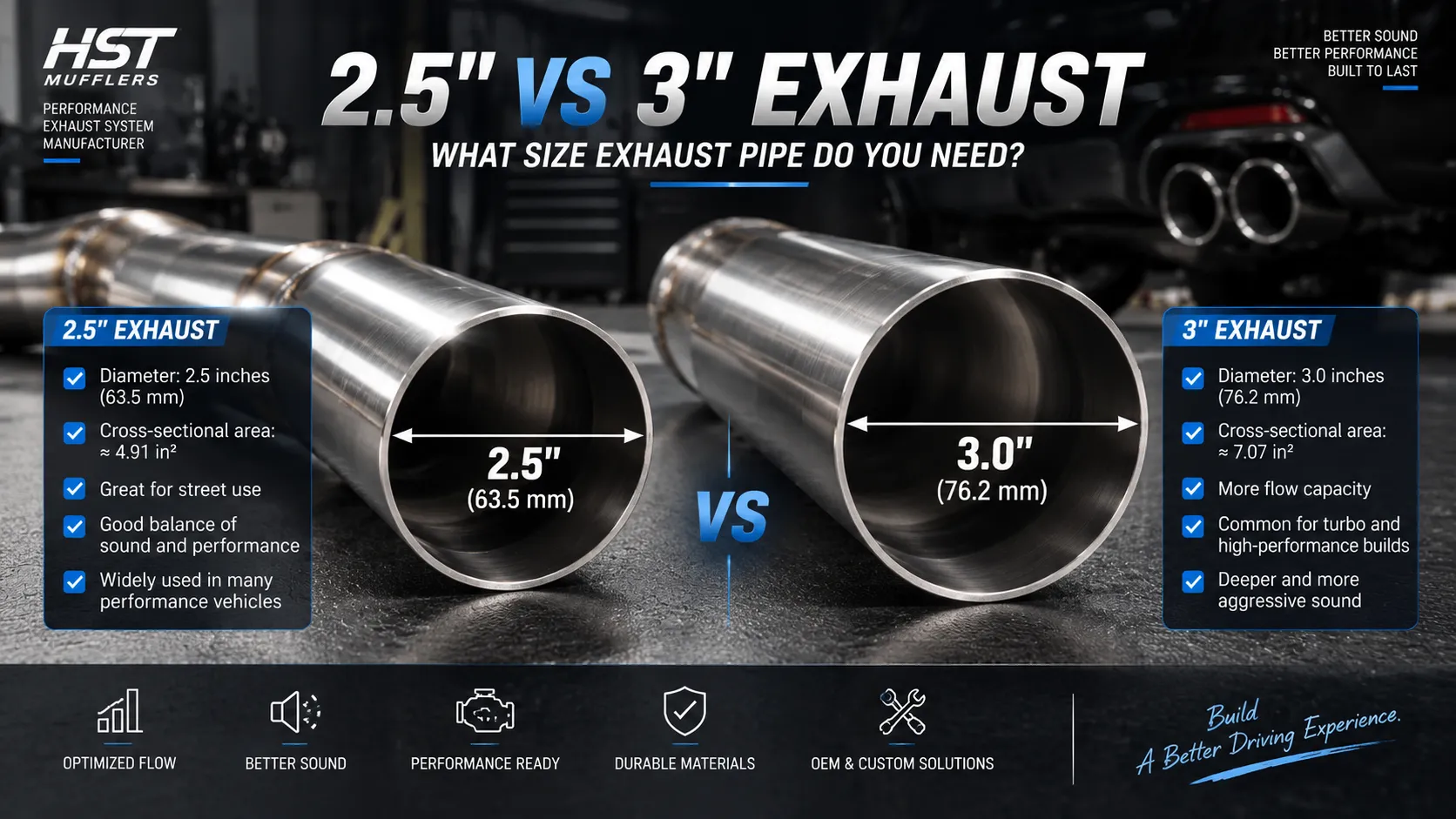
Common performance exhaust pipe diameters include 2.25-inch, 2.5-inch, and 3-inch configurations, although many other sizes are available.
Using the correct inlet and outlet dimensions helps simplify installation and maintain a consistent exhaust path.
-
Muffler Body Size
A compact muffler may be necessary when underbody space is limited.
Larger mufflers can offer different acoustic characteristics and may be appropriate when controlling exhaust volume is important.
Always check available installation space before selecting a universal muffler.
-
Internal Design
Different muffler designs manage exhaust gases and sound differently.
Performance-oriented applications often use designs intended to maintain good exhaust flow while controlling unwanted frequencies.
The correct design depends on the desired balance between sound and performance.
-
Sound Preference
Ask a simple question before buying:
How do you want the vehicle to sound?
A street-driven truck, sports car, muscle car, and daily commuter may all require different sound characteristics.
“Louder” does not automatically mean “better.”
A quality performance exhaust should create a sound appropriate for the vehicle and the driver’s expectations.
-
Construction Material
Material quality directly affects durability, particularly in areas exposed to rain, road salt, moisture, and temperature changes.
This brings us to another important decision: stainless steel versus aluminized steel.
Stainless Steel vs. Aluminized Steel Exhaust
Material selection can significantly affect the lifespan and cost of an exhaust system.
Stainless Steel Exhaust
A stainless steel exhaust system is popular because stainless steel offers strong corrosion resistance and durability.
Different stainless grades are used throughout the automotive exhaust industry.
For performance applications, stainless steel can be especially attractive when buyers want:
- Long service life
- Better corrosion resistance
- Premium appearance
- Durable mufflers and exhaust tubing
- Resistance to harsh operating environments
A stainless steel muffler can be particularly useful for vehicles driven in wet climates or regions where road salt contributes to corrosion.
Aluminized Steel Exhaust
Aluminized steel typically provides a lower-cost alternative.
The aluminum-silicon coating helps protect the underlying steel from corrosion, making it suitable for many replacement and aftermarket exhaust applications.
Its main advantage is cost.
However, for buyers prioritizing maximum corrosion resistance and long-term durability, stainless steel is often the preferred material.
The correct choice ultimately depends on budget, climate, vehicle use, and expected service life.
What Size Exhaust Pipe Do You Need?
One of the most common performance exhaust questions is:
What size exhaust pipe should I use?
There is no single diameter that is best for every engine.
The ideal exhaust pipe size depends on several factors:
- Engine displacement
- Horsepower level
- Turbocharged vs. naturally aspirated engine
- Single vs. dual exhaust configuration
- RPM range
- Vehicle application
- Other engine modifications
A larger pipe can support greater exhaust volume, but unnecessarily oversized tubing is not automatically an upgrade.
For example, 3-inch exhaust pipe is popular in many high-performance applications, particularly when greater airflow capacity is required.
However, a smaller engine with modest airflow requirements may not need a 3-inch system.
Rather than following the “bigger is always better” approach, exhaust diameter should be matched to the engine and intended performance level.
Single Exhaust vs. Dual Exhaust
Another common decision involves single and dual exhaust configurations.
A single exhaust system routes exhaust through one primary outlet path.
A dual exhaust system uses two exhaust paths or two outlets, depending on system design.
Dual exhaust is often selected for appearance, sound, packaging, or airflow requirements, especially on trucks, muscle cars, and V-engine applications.
But two exhaust tips do not necessarily mean the vehicle has a true dual exhaust system.
Some systems divide a single exhaust path near the rear of the vehicle to create dual exits.
When comparing single and dual exhaust options, evaluate the entire system rather than judging performance by the number of exhaust tips.
Why Mandrel-Bent Exhaust Tubing Matters
Exhaust pipes often need multiple bends to travel around suspension components, the driveshaft, fuel tank, rear axle, and chassis.
The way these bends are formed matters.
Mandrel-bent exhaust tubing is designed to maintain a more consistent internal diameter through bends.
This helps create a smoother exhaust path compared with poorly formed tubing that significantly narrows at each bend.
For performance exhaust applications, maintaining consistent pipe geometry can help support predictable exhaust flow.
Quality tubing, however, is only one part of the system.
Good welds, accurate hangers, correct dimensions, properly designed mufflers, and reliable clamps are equally important.
Fitment Is Just as Important as Performance
An exhaust system can use excellent materials and still create a poor customer experience if it does not fit correctly.
Fitment affects:
- Installation time
- Exhaust tip alignment
- Ground clearance
- Clearance around suspension and chassis components
- Leak prevention
- Long-term durability
- Vibration and unwanted noise
Before buying a vehicle-specific aftermarket exhaust system, verify the year, make, model, engine, drivetrain, cab or bed configuration where applicable, and any other fitment requirements.
For universal performance mufflers and exhaust components, accurate measurements become even more important.
Check inlet diameter, outlet diameter, overall length, muffler body dimensions, inlet/outlet position, and available installation space.
Correct fitment can be just as important as the muffler’s internal design.
How to Choose the Best Exhaust System for Your Vehicle
Instead of asking, “What is the best exhaust system?” ask:
What is the best exhaust system for my vehicle and my goals?
Start by identifying your priorities.
For Better Sound
Focus on muffler design, resonators, exhaust configuration, and the desired exterior and interior sound level.
A performance muffler or axle-back system may be enough if sound is the primary goal.
For Performance and Flow
Consider a properly engineered cat-back exhaust system with appropriately sized tubing and a free-flowing muffler design.
Remember that the complete engine setup matters.
For Durability
Look closely at construction materials.
A stainless steel exhaust can be an excellent option when corrosion resistance and long service life are priorities.
For Appearance
Exhaust tips can dramatically change the rear appearance of a vehicle.
Consider tip diameter, shape, finish, wall design, exit location, and single or dual configurations.
For a Balanced Daily Driver
Avoid choosing components based exclusively on maximum volume.
A well-balanced street exhaust should deliver an enjoyable tone under acceleration while remaining comfortable during normal cruising.
Is a Performance Exhaust Worth It?
For the right driver, it can be.
A quality performance exhaust can change the character of a vehicle by improving its sound, appearance, and potentially its exhaust flow.
But the key word is quality.
An effective exhaust setup depends on more than one component.
Pipe diameter, muffler construction, materials, bends, weld quality, fitment, mounting points, resonators, and exhaust tips all work together.
Instead of buying an exhaust simply because it is loud or has large tubing, choose a system engineered around the vehicle and your actual goals.
Frequently Asked Questions About Performance Exhaust Systems
Does a performance muffler increase horsepower?
A performance muffler can reduce restriction compared with some factory mufflers, but horsepower gains depend on the complete exhaust system and engine setup. A muffler alone should not be expected to create the same result on every vehicle.
Is a cat-back exhaust better than an axle-back exhaust?
A cat-back replaces more of the exhaust system and can provide greater opportunities to modify exhaust flow and sound. An axle-back replaces fewer components and can be a good option when sound, appearance, cost, and simpler installation are the main priorities.
Is stainless steel better for an exhaust system?
Stainless steel offers strong corrosion resistance and durability, making it a popular choice for performance exhaust systems and mufflers. The best material depends on budget, climate, vehicle use, and expected lifespan.
What size exhaust pipe is best for performance?
There is no universal best size. Exhaust pipe diameter should match engine displacement, airflow requirements, horsepower, induction type, and the overall exhaust configuration.
Is a 3-inch exhaust better than a 2.5-inch exhaust?
Not necessarily. A 3-inch exhaust can support higher exhaust flow in applications that require it, but larger tubing is not automatically better for every engine. Correct sizing is more important than simply choosing the largest diameter.
What is the difference between a muffler and a resonator?
A muffler primarily controls overall exhaust sound, while a resonator is generally used to target particular frequencies and refine the exhaust note. Many performance exhaust systems use both to achieve the desired sound characteristics.
Can I install a performance exhaust on a daily driver?
Yes. Many aftermarket exhaust systems are designed specifically for street-driven vehicles. For daily use, consider cabin noise, cruising comfort, fitment, material quality, and local noise regulations in addition to exterior sound.
Build the Right Exhaust Setup for Your Goals
Choosing the right performance exhaust system comes down to understanding what you want from the vehicle.
Some drivers want a deeper exhaust note. Others want improved flow, better durability, a more aggressive appearance, or a combination of all four.
A properly selected performance muffler, cat-back system, axle-back exhaust, stainless steel exhaust pipe, and exhaust tip configuration can help create a setup that matches those goals.
Before choosing components, consider the complete system:
Engine + Exhaust Flow + Pipe Size + Muffler + Material + Sound + Fitment + Vehicle Use
When these elements work together, the result is much more valuable than simply installing the largest pipe or loudest muffler available.
Whether you’re upgrading a street car, muscle car, pickup truck, SUV, or custom performance project, start with components that match your vehicle—and build the exhaust system around the performance, sound, durability, and appearance you actually want.