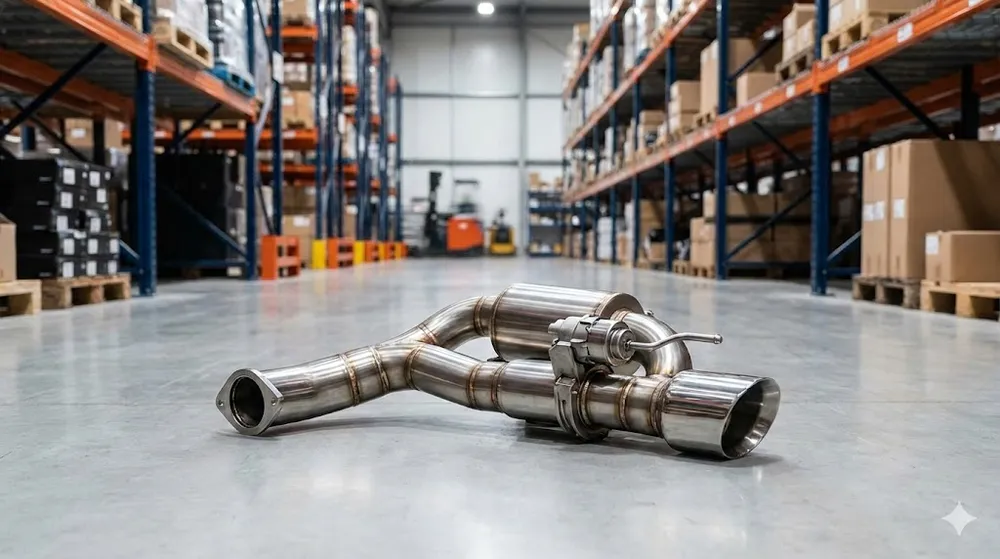
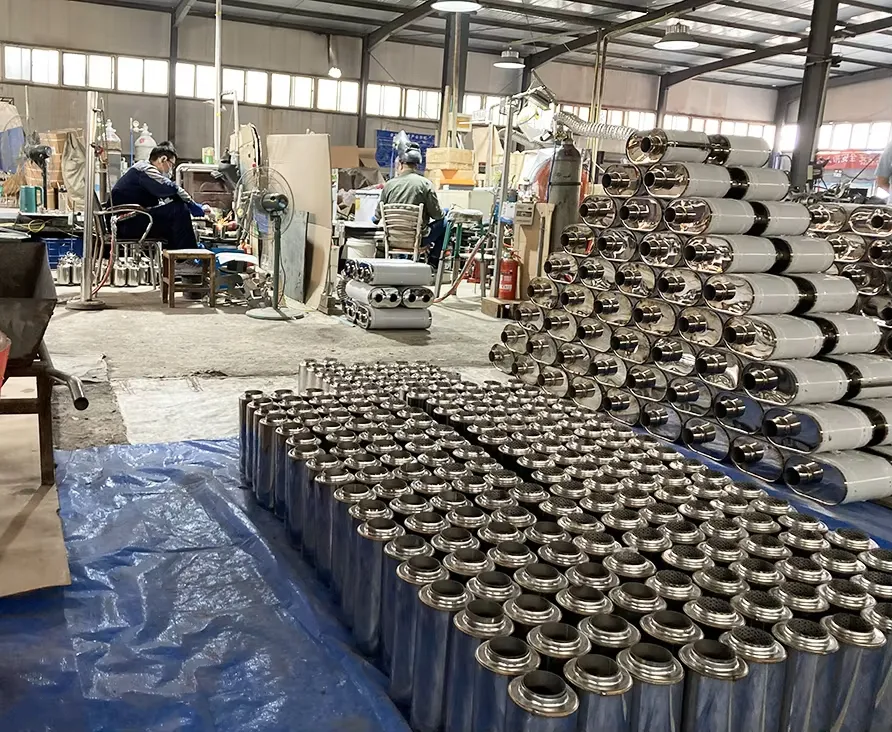
Choosing between a titanium vs stainless steel exhaust is not only about deciding which metal sounds more premium.
The material can affect weight, durability, manufacturing cost, appearance, exhaust construction, and the final price of a complete system.
Titanium is well known in high-end performance applications because it is light and resistant to corrosion. Stainless steel, however, remains one of the most practical materials for aftermarket exhaust systems because it combines durability, corrosion resistance, manufacturing flexibility, and reasonable cost.
For many street cars, daily-driven performance vehicles, aftermarket exhaust products, and commercial exhaust programs, stainless steel provides a strong balance between performance and long-term usability.
This guide explains the main differences between titanium and stainless steel and helps drivers, performance shops, distributors, and automotive businesses decide which material better fits their application.
What Is a Stainless Steel Exhaust?
A stainless steel exhaust system uses corrosion-resistant steel for components such as pipes, mufflers, resonators, exhaust tips, and other sections of the exhaust.
Stainless steel contains chromium, which helps create a protective surface layer that improves corrosion resistance compared with ordinary carbon steel.
Different stainless steel grades have different characteristics, so the phrase “stainless steel exhaust” does not describe every product equally.
Material thickness, welding quality, surface treatment, muffler construction, bending method, and exhaust layout can all affect the final product.
That is why material should always be evaluated together with manufacturing quality.
Why Stainless Steel Is Common in Performance Exhausts
Stainless steel works well in exhaust applications because an exhaust system operates in a difficult environment.
It repeatedly experiences:
- High temperatures
- Heating and cooling cycles
- Moisture
- Condensation
- Road water
- Dirt and debris
- Exhaust gases
- Environmental contamination
A suitable stainless steel can provide useful resistance to these conditions while remaining practical to fabricate into pipes, mufflers, resonators, and complete exhaust systems.
This balance helps explain why stainless steel is widely used in both original automotive applications and the aftermarket.
What Is a Titanium Exhaust?
A titanium exhaust uses titanium or titanium alloys for part or all of the exhaust system.
Titanium is especially attractive for performance vehicles because it has a high strength-to-weight ratio.
Its biggest advantage in an exhaust application is normally weight reduction.
This makes it popular in applications where lowering vehicle mass is an important goal, including high-end sports cars, track-oriented vehicles, motorcycles, and premium aftermarket builds.
Titanium also has strong corrosion resistance.
However, the material normally costs more and requires more specialized manufacturing processes than stainless steel.
Stainless Steel vs Titanium Exhaust Weight
Weight is the area where titanium has its clearest advantage.
Titanium is less dense than stainless steel, so a properly designed titanium system can weigh noticeably less than a comparable stainless steel exhaust.
This matters most when the owner is intentionally reducing vehicle weight.
A lighter exhaust may be attractive on:
- Track-focused cars
- Motorsport builds
- High-end performance vehicles
- Lightweight project cars
- Applications where every kilogram matters
For a normal street-driven vehicle, however, weight is only one part of the buying decision.
A customer must also consider price, durability, fitment, sound, installation, and long-term use.
Does a Lighter Titanium Exhaust Add Horsepower?
Not automatically.
This is an important distinction.
Changing from stainless steel to titanium does not create horsepower simply because titanium is lighter.
Engine performance is more directly affected by factors such as:
- Pipe diameter
- Exhaust restriction
- Muffler design
- Turbocharger configuration
- Catalytic converter design
- Manifold design
- Engine tuning
- Overall exhaust flow
Lowering vehicle weight can improve the overall power-to-weight relationship, but that is different from increasing engine horsepower.
Any specific horsepower claim should be supported by testing of the exact vehicle and exhaust configuration.
Stainless Steel Exhaust Durability
Durability is one of the strongest reasons to choose stainless steel.
A properly manufactured stainless steel exhaust can handle repeated heating and cooling while providing good resistance to corrosion.
This is especially useful for vehicles that are driven regularly rather than only used at shows or track events.
Daily driving exposes exhaust systems to conditions that are easy to overlook.
Rainwater, road spray, condensation, dirt, salts in some climates, and heat cycles all affect exhaust components over time.
Because stainless steel is suitable for these demanding conditions, it remains an attractive material for long-term street use.
Is Every Stainless Steel Exhaust the Same?
No.
Two exhaust systems can both be sold as “stainless steel” while being very different products.
Important differences can include:
Stainless Steel Grade
Different grades provide different combinations of corrosion resistance, heat resistance, strength, and manufacturing characteristics.
A buyer should not assume that every stainless steel exhaust uses the same specification.
Wall Thickness
Thicker tubing can increase weight and change manufacturing characteristics.
Thinner tubing can reduce weight, but the design still needs to provide suitable durability.
Welding Quality
Poor welding can reduce the quality of an otherwise good material.
Weld consistency, penetration, alignment, and finishing are important parts of exhaust production.
Pipe Bending
Smooth bends help maintain the intended internal pipe shape.
A quality exhaust should avoid unnecessary deformation in critical areas.
Why Stainless Steel Works Well for Daily Driving
For many street cars, stainless steel offers a practical combination of properties.
A daily driver normally needs more than minimum weight.
The exhaust should also provide:
- Stable fitment
- Resistance to corrosion
- Reliable construction
- Reasonable cost
- Suitable sound
- Long-term usability
This is why stainless steel often makes more sense for street-driven vehicles than a more expensive titanium system.
A titanium exhaust may still be an excellent product, but the customer should be paying for an advantage that matters to the actual use of the vehicle.
If maximum weight reduction is not a priority, stainless steel can provide stronger overall value.
Stainless Steel vs Titanium Exhaust Sound
Many buyers believe titanium always sounds better than stainless steel.
The real answer is more complicated.
Material can influence acoustic characteristics, but exhaust sound is determined by the complete system.
Important factors include:
- Engine type
- Engine speed
- Turbocharging
- Number of cylinders
- Pipe diameter
- Pipe wall thickness
- Muffler volume
- Muffler internal design
- Resonator design
- Exhaust valves
- Exhaust tip design
Because of these variables, it is difficult to judge sound quality using material alone.
Does Titanium Have a More Metallic Sound?
Titanium systems are often described as producing a sharper or more metallic exhaust note.
However, this does not mean every titanium exhaust sounds this way.
A stainless steel system with a different muffler, resonator, or pipe design can sound much more aggressive than a titanium system.
The correct comparison should therefore be between complete exhaust systems installed on the same or similar vehicle.
Can Stainless Steel Produce a Deep Exhaust Sound?
Yes.
A properly designed stainless steel system can create a deep, aggressive, or refined exhaust tone depending on its construction.
For example, changing muffler volume, internal perforated tubes, resonators, pipe diameter, and valve position can significantly alter the final sound.
This means stainless steel gives manufacturers considerable flexibility when developing performance exhaust products.
For customers mainly interested in sound, system design is normally more important than choosing titanium simply because it is a premium material.
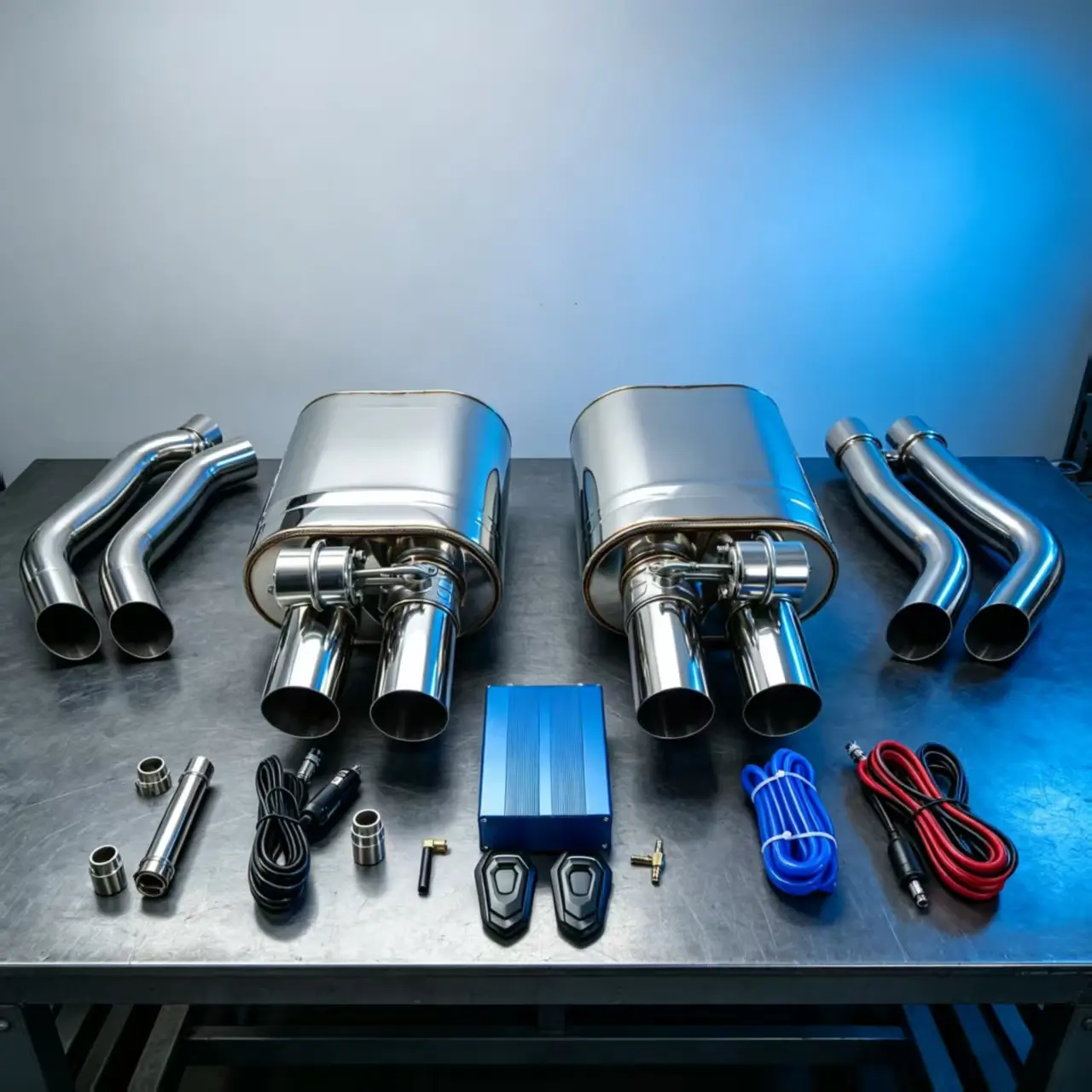
Stainless Steel for Valved Exhaust Systems
Stainless steel is also well suited to valved exhaust systems.
A valved exhaust changes the exhaust path or sound characteristics through a mechanical valve.
Depending on the design, opening or closing the valve may change how much exhaust gas travels through a muffler section or bypass path.
This gives the driver more control over exhaust sound.
The material itself does not determine whether the valve performs well.
More important factors include:
- Valve construction
- Motor or actuator quality
- Valve position
- Heat exposure
- Wiring or pneumatic control
- Muffler design
- Exhaust fitment
HST primarily manufactures stainless steel exhaust products, including applications involving valved muffler and exhaust designs.
For this type of product, stainless steel provides a practical balance between manufacturing, durability, and commercial cost.
Stainless Steel for Performance Mufflers
The muffler is another area where stainless steel performs well.
A stainless steel muffler can combine a durable outer shell with different internal structures depending on the desired sound and flow characteristics.
A manufacturer can adjust:
- Muffler body size
- Inlet size
- Outlet size
- Internal tubing
- Perforation design
- Sound-absorbing material
- Valve configuration
This flexibility makes stainless steel suitable for both universal mufflers and vehicle-specific performance exhaust systems.
For more information about how exhaust design affects the whole vehicle system, see ourPerformance Exhaust System Guide
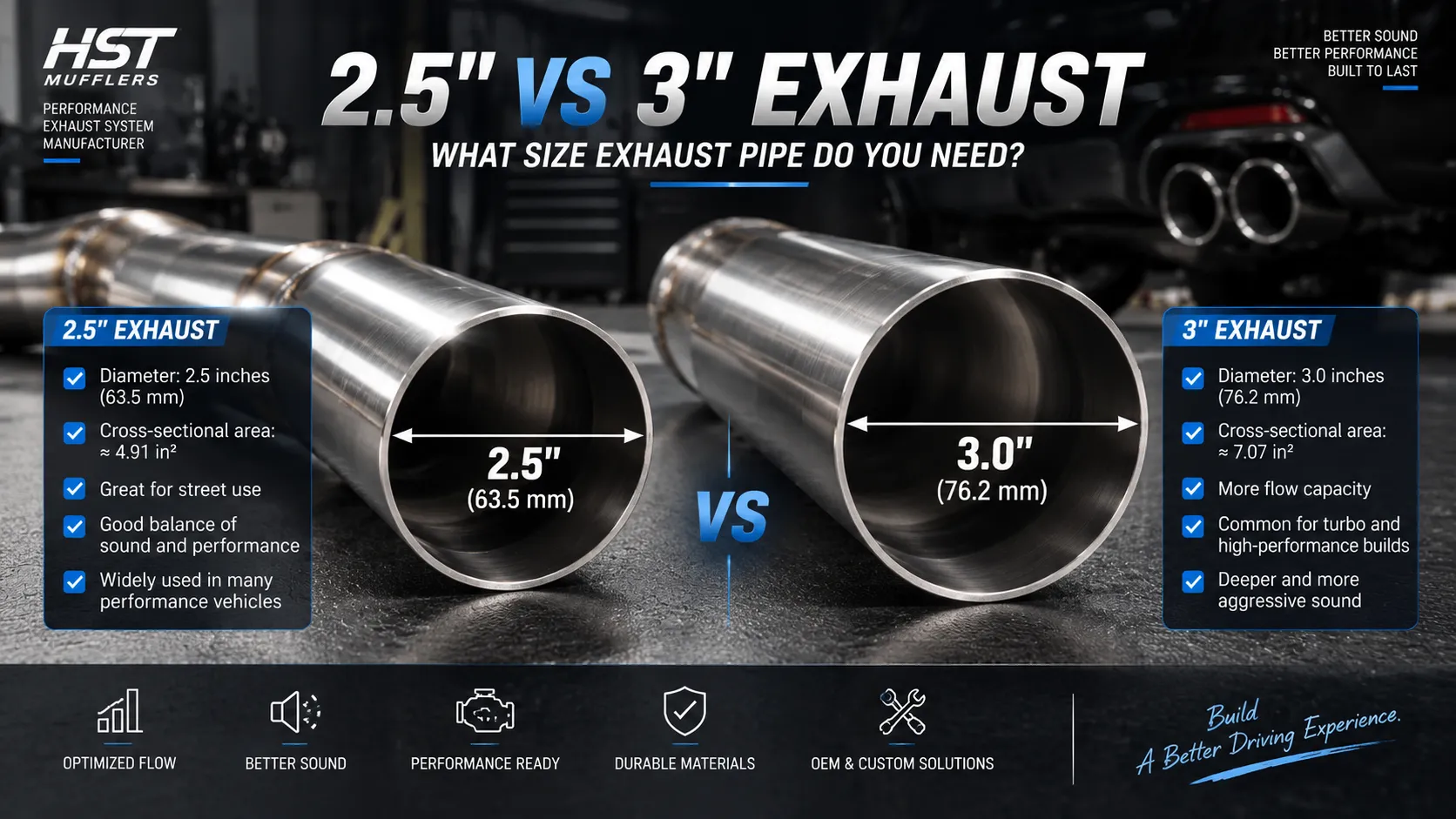
How Pipe Size Affects Stainless Steel Exhaust Performance
Material alone cannot determine whether an exhaust performs well.
Pipe diameter is another major design factor.
A larger exhaust pipe has a larger internal cross-sectional area, but bigger is not always better for every engine.
The right diameter depends on:
- Engine displacement
- Turbo or naturally aspirated configuration
- Power target
- Exhaust layout
- Single or dual exhaust design
- Available vehicle space
For a deeper explanation, see our2.5-Inch vs. 3-Inch Exhaust Guide.
A properly sized stainless steel exhaust can provide good flow without requiring titanium construction.
Stainless Steel Cat-Back Exhaust Systems
Stainless steel is widely suited to complete cat-back exhaust systems.
A cat-back system normally replaces the exhaust components behind the catalytic converter.
Depending on the vehicle, that may include:
- Mid-pipes
- Resonators
- Mufflers
- Valves
- Rear pipes
- Exhaust tips
Because this section covers a large part of the exhaust system, durability and cost become especially important.
Using titanium for a complete system can reduce weight, but it normally increases product cost.
Stainless steel can therefore be a practical choice for buyers who want a complete performance exhaust without moving into the highest price category.
You can learn more about different exhaust layouts in our Cat-Back vs. Axle-Back Exhaust Guide
Titanium vs Stainless Steel Exhaust Cost
Cost is one of the biggest practical differences between these materials.
Titanium material itself is generally more expensive, and titanium fabrication often requires greater control during forming and welding.
That cost eventually appears in the retail price.
Stainless steel has a more established supply and manufacturing chain for automotive exhaust products.
This makes it easier to use across:
- Universal mufflers
- Cat-back systems
- Valved exhausts
- Replacement exhaust products
- Wholesale exhaust programs
- Custom exhaust manufacturing
For customers comparing value rather than minimum weight, stainless steel is often the more practical choice.
Why Stainless Steel Matters for Wholesale Exhaust Buyers
A consumer may purchase one exhaust system.
A distributor or performance shop may purchase dozens or hundreds over time.
That changes the buying priorities.
B2B customers need to consider:
- Product consistency
- Material availability
- Manufacturing stability
- Price positioning
- Shipping weight
- Fitment
- Quality control
- Repeat orders
- After-sales support
Titanium can work well for premium product lines.
Stainless steel, however, is often easier to position across a wider customer group.
It can support performance products at a price level that is more accessible to many consumers.
This makes it particularly useful for distributors and brands building broader aftermarket product ranges.
Why Stainless Steel Fits Custom Exhaust Manufacturing
Custom manufacturing requires flexibility.
A customer may request changes to:
- Pipe diameter
- Muffler dimensions
- Inlet and outlet positions
- Valve configuration
- Exhaust tips
- Brackets
- Surface finish
- Packaging
- Branding
Stainless steel is suitable for a wide range of fabrication methods, making it practical for many custom exhaust programs.
HST mainly focuses on stainless steel exhaust manufacturing, which allows its product development and production process to remain centered on the material used most often in its current product range.
For wholesale and custom customers, this can be more useful than offering many materials without a clear manufacturing focus.
When Does Titanium Exhaust Make More Sense?
Stainless steel should not be presented as better in every situation.
Titanium has a real advantage when weight is one of the highest priorities.
It may be the better choice for:
- Track-focused vehicles
- High-end sports cars
- Premium builds
- Motorsport applications
- Customers willing to pay more for weight reduction
That advantage is legitimate.
However, many street-performance customers do not need to prioritize minimum exhaust weight above all other factors.
For them, stainless steel often delivers the more balanced package.
When Is Stainless Steel the Better Choice?
Stainless steel is particularly attractive when the customer wants:
- Good corrosion resistance
- Reliable everyday use
- Performance-oriented construction
- Reasonable product cost
- Custom manufacturing flexibility
- Wide availability
- Easier commercial positioning
That combination explains why stainless steel remains important across the performance exhaust market.
It is not simply the “cheaper alternative” to titanium.
For many applications, it is the material that better matches the product’s real purpose.
How to Choose the Right Exhaust Material
Before choosing titanium or stainless steel, answer a few practical questions.
What Is the Vehicle Used For?
A track car and a daily driver have different priorities.
How Important Is Weight Reduction?
If every kilogram matters, titanium deserves serious consideration.
If weight reduction is secondary, stainless steel may provide better value.
What Is the Budget?
Material choice affects the total system price.
Is the Exhaust Custom or Mass Produced?
Large-volume or custom programs may benefit from the manufacturing flexibility of stainless steel.
What Sound Does the Customer Want?
Sound should be evaluated through system design rather than material alone.
Titanium vs Stainless Steel Exhaust FAQ
1. Is stainless steel better than titanium for an exhaust?
It depends on the intended use.
Titanium offers a clear advantage when reducing exhaust weight is a major goal. Stainless steel usually provides a better balance of durability, corrosion resistance, manufacturing flexibility, and cost.
For many daily-driven performance vehicles and aftermarket exhaust applications, stainless steel is the more practical choice.
2. Is stainless steel good for a performance exhaust?
Yes.
Stainless steel is widely suitable for performance exhaust pipes, mufflers, resonators, cat-back systems, and valved exhaust products.
The final result still depends on the complete design.
Pipe diameter, muffler structure, bending, welding, and fitment matter just as much as the material itself.
3. Does stainless steel exhaust sound better than titanium?
There is no universal winner.
Titanium and stainless steel can have different acoustic characteristics, but sound depends more heavily on the complete exhaust design.
A well-designed stainless steel system can produce a deep and aggressive sound, while another system can be quieter and more refined.
Material alone cannot predict the final exhaust note.
4. Does titanium exhaust increase horsepower?
Titanium does not automatically increase horsepower.
A performance improvement must come from the complete system, including exhaust flow, pipe sizing, muffler design, catalytic converter configuration, turbo setup, and engine calibration.
Titanium’s clearest material advantage is reduced weight rather than guaranteed horsepower.
5. Why Does HST Mainly Use Stainless Steel for Exhaust Products?
HST’s current manufacturing focus is mainly on stainless steel performance exhaust products.
This material is suitable for mufflers, exhaust tubing, valved exhaust systems, and custom exhaust projects while offering a practical balance between corrosion resistance, durability, production flexibility, and cost.
For distributors and performance businesses, this also allows stainless steel products to serve a wider customer range than many premium-only materials.
6. Can HST Customize Stainless Steel Exhaust Systems?
Yes. HST supports custom exhaust manufacturing based on customer requirements.
A project can involve specifications such as pipe size, muffler dimensions, inlet and outlet design, valve configuration, tips, brackets, and product branding.
The exact structure should be confirmed before production because vehicle fitment and exhaust requirements can vary between models.
Providing dimensions, drawings, samples, or detailed vehicle information helps make the development process more accurate.
Stainless Steel or Titanium: Final Verdict
The titanium vs stainless steel exhaust comparison does not have one answer for every vehicle.
Titanium has an important advantage in weight reduction. That makes it attractive for premium, motorsport, and weight-focused applications.
For a much wider group of street-performance vehicles, daily drivers, aftermarket products, wholesale programs, and custom exhaust projects, stainless steel offers a strong combination of:
durability, corrosion resistance, manufacturing flexibility, performance potential, and cost control.
That is why material choice should not be based only on which option sounds more expensive or more exotic.
A better exhaust system comes from the correct combination of:
Material + Pipe Diameter + Muffler Design + Valve Design + Welding + Fitment + Manufacturing Quality.
For HST, stainless steel is the primary material focus because it matches the type of performance exhaust products and custom manufacturing programs the factory currently serves.
For drivers, distributors, performance shops, and aftermarket brands, the best choice is ultimately the material that fits the real application—not simply the most expensive material available.